
Retail growth does not just add stores. It multiplies planning complexity. As a retail network expands from dozens of locations to hundreds or thousands, finance must coordinate store-level budgets, regional targets, operating expenses, revenue forecasts, capital plans, and changing business assumptions—while keeping…
Retail growth does not just add stores. It multiplies planning complexity. As a retail network expands from dozens of locations to hundreds or thousands, finance must coordinate store-level budgets, regional targets, operating expenses, revenue forecasts, capital plans, and changing business assumptions—while keeping every plan aligned with corporate strategy.
Spreadsheets can be effective when a business is relatively small. At scale, however, version control, manual consolidation, inconsistent formulas, fragmented data, and lengthy approval cycles can turn budgeting into an administrative burden. The challenge is no longer simply how to build a budget. It is how to create a planning process that can scale with the business and help management respond faster.
For retailers, this is where connected enterprise planning can make a material difference: bringing finance, operations, stores, and management into a common planning environment.
Why Retail Planning Becomes Harder as the Store Network Grows
Retail planning spans multiple levels of the organization. Corporate finance sets targets and governance; regional and area managers translate those targets into local plans; stores contribute operating assumptions; and sales, procurement, supply chain, and business-unit teams provide the drivers that shape revenue, cost, inventory, labor, and profitability.
Even a seemingly simple change—such as revising sales expectations for a group of stores—can affect labor requirements, operating expenses, profitability, regional targets, and resource allocation. When those dependencies are managed across disconnected spreadsheets, finance teams can spend more time collecting, checking, reconciling, and consolidating data than analyzing what the numbers mean.
1. Spreadsheet Complexity Compounds at Scale
Spreadsheet flexibility is valuable, but at enterprise scale it can also create risk. Multiple files and versions, manual inputs, inconsistent formulas, and local workarounds make it harder to maintain a single source of truth. Before management can review a plan, finance may need to repeatedly collect, validate, reconcile, and consolidate submissions from across the organization.
2. Store-Level Planning Must Stay Connected to Corporate Targets
Retail decisions increasingly need to be made at store level. Management may want to compare locations, adjust budgets for local market conditions, prioritize higher-potential stores, or understand the financial impact of new openings. Without a centralized planning framework, however, local decisions can become disconnected from regional and corporate financial objectives.
3. Static Budgets Struggle to Keep Up with Retail Change
Consumer demand, traffic, promotions, operating costs, store openings, and regional conditions can change quickly. A budget approved months earlier may no longer reflect current operating realities. Retailers therefore need more than an annual budgeting exercise: they need rolling forecasts and scenario planning that allow finance and business teams to update assumptions, test alternatives, and respond to change.

What Retailers Need Beyond Spreadsheets
A scalable retail planning environment should connect financial planning with operational execution rather than treating budgeting as an isolated finance process. Five capabilities are particularly important.
Centralized Planning and Governance
Finance should be able to define common structures, assumptions, templates, workflows, and business rules while allowing regional and store teams to contribute local inputs. This creates consistency without eliminating the flexibility required by local operations.
Multidimensional Retail Modeling
Retail plans rarely depend on a single dimension. Budgets may need to be modeled by store, region, business unit, product category, expense type, channel, and time period. Connecting these dimensions allows management to see how a change in one area flows through the broader financial plan.
Automated Data Integration
Planning becomes more useful when it is connected to actual business data. Integrating financial and operational sources reduces repetitive data movement and gives finance a more reliable foundation for budgeting, forecasting, variance analysis, and management reporting.
Rolling Forecasts and Scenario Modeling
A budget should not become obsolete once it is approved. Rolling forecasts update the outlook as actuals and assumptions change, while scenario modeling lets management test alternatives before committing resources—for example, changes in store revenue, operating expenses, new-store assumptions, or capital allocation.
Controlled Collaboration
Scaling planning requires both collaboration and control. Version management, audit trails, standardized workflows, approval processes, and centralized data help ensure that hundreds or thousands of contributors are working from consistent information.
From Store Budgets to Enterprise Performance Management
The larger opportunity is to move beyond budgeting as a periodic finance exercise. A modern enterprise performance management (EPM) platform can connect budgeting, forecasting, operational planning, performance monitoring, and financial analysis in one environment.
This gives finance and management a faster way to answer questions such as:
·Which stores and regions are ahead of or behind plan?
·Where should resources be reallocated?
·How will changes in demand affect revenue, cost, and profitability?
·What is the financial impact of new-store openings or revised operating assumptions?
·Which areas require management attention?
·How quickly can the organization respond when market conditions change?
Instead of only explaining what happened, finance can use connected planning data to evaluate what may happen next—and what the business should do about it.
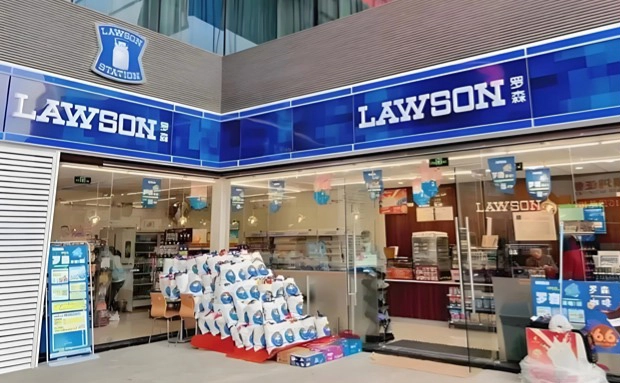
Customer Story: How LAWSON Built a Planning Model for 6,300+ Stores
LAWSON demonstrates what retail planning at scale looks like in practice. As the company expanded across more than 6,300 convenience stores, the challenge was not simply processing more budget submissions. It was creating a planning architecture capable of connecting corporate strategy with regional and store-level realities while giving management timely visibility into performance.
Rapid expansion increased the number of planning inputs, operating metrics, scenarios, and stakeholders that finance needed to coordinate. Manual processes could not provide the speed, transparency, and scalability required for a network of this size. LAWSON therefore needed a unified budgeting environment that could support growth without allowing planning complexity to grow at the same rate.
The Transformation
LAWSON adopted EVOX as its comprehensive budgeting platform, creating a connected foundation for budgeting, budget-to-actual monitoring, scenario planning, forecasting, and management analysis.
One unified budgeting framework
EVOX centralized group-wide budgeting and combined manual inputs with automated data interfaces. This reduced dependence on fragmented spreadsheets while creating a consistent planning structure across the organization.
Planning that connects headquarters with store-level realities
Multidimensional modeling linked corporate directives with operating assumptions such as store expansion targets, CAPEX depreciation schedules, and new-outlet performance benchmarks. Management could evaluate scenarios without disconnecting strategic targets from operational execution.
Real-time budget-to-actual visibility
The environment synchronized more than 300 operational metrics, giving management a more timely view of performance across regional and store levels rather than waiting for lengthy manual consolidation.
Configurable business logic at enterprise scale
More than 40 configurable business rules supported operational requirements ranging from workforce planning to supply-chain-related planning, providing the flexibility required by a large and evolving retail organization.
AI-powered forecasting and scenario analysis
Forecasting and sensitivity analysis helped teams evaluate changing assumptions faster, supporting more proactive planning and resource decisions.
Measurable Business Impact
|
Outcome
|
Business significance
|
|
95% process automation
|
Reduced manual work and errors across the budgeting process.
|
|
60% shorter budget cycle
|
Accelerated planning so management could move from plan creation to execution faster.
|
|
360° financial visibility
|
Connected regional and store-level information to provide a more comprehensive view of financial performance.
|
|
3× faster resource reallocation
|
Enabled management to respond more quickly to changing market conditions and redirect resources.
|
The significance of these results goes beyond efficiency. LAWSON moved toward a planning model in which finance and operations could work from a connected set of assumptions and performance information. Budgeting became less about consolidating files and more about supporting faster decisions across a rapidly expanding retail network.
Why a Connected Planning Platform Matters
Retailers can solve individual planning problems with separate tools, but disconnected applications may simply replace spreadsheet silos with system silos. A stronger approach is to establish a connected planning foundation that can support multiple finance and operational processes as the organization grows.
EVOX brings together:
·Enterprise budgeting and forecasting
·Store and regional planning
·Rolling forecasts and scenario modeling
·Budget-to-actual and performance analysis
·Centralized data integration
·AI-powered forecasting and analysis
·Workflow, approvals, auditability, and version control
The objective is not simply to replace Excel. It is to give finance and business teams a scalable environment for translating strategy into operational plans, monitoring performance, testing scenarios, and making decisions with greater speed and confidence.
Beyond Spreadsheets: Helping Finance Lead Retail Growth
For a growing retailer, spreadsheets eventually become more than a productivity issue. They can limit visibility, slow decision-making, and make it harder to coordinate planning across an expanding store network.
LAWSON shows what becomes possible when planning is redesigned around centralized data, automation, multidimensional modeling, governance, and intelligent forecasting. With EVOX, headquarters, regions, and stores can operate within a connected planning framework while retaining the flexibility needed to respond to local business conditions.
The goal is not simply a faster budget. It is a finance function that can see the business more clearly, model change more quickly, and help management allocate resources with greater confidence as the organization grows.
About EVOX
EVOX is an enterprise performance management platform for budgeting, forecasting, financial analysis, scenario planning, and performance management. Its connected planning capabilities are designed to help organizations reduce manual work, strengthen governance, and turn financial and operational data into faster business decisions.
Source note: LAWSON case metrics and implementation details in this article are based on EVOX’s published LAWSON customer story. Store-count context reflects the 6,300+ store footprint used in the case study.
Tony Lai is the General Manager of EVOX Platform, where he works with finance leaders across industries to improve strategic planning, forecasting, and enterprise performance management. He frequently collaborates with CFOs and FP&A teams in life sciences organizations to strengthen financial visibility across complex R&D portfolios.
See it in your environment
Take the next step with EVOX
Explore how connected planning, consolidation, and performance management can support your priorities.
Start a conversation