
In today’s retail landscape, revenue growth alone is no longer enough. Rising operating costs, changing consumer behavior, and increasing competition are forcing retailers to answer a more critical question:Which stores are truly driving profitability, and which ones are quietly eroding value?Many retailers…
In today’s retail landscape, revenue growth alone is no longer enough. Rising operating costs, changing consumer behavior, and increasing competition are forcing retailers to answer a more critical question:
Which stores are truly driving profitability, and which ones are quietly eroding value?
Many retailers have visibility into sales performance by store, region, or channel. However, understanding true store-level profitability remains a major challenge. A store may generate high revenue but deliver limited profit after accounting for rent, labor costs, inventory investment, promotions, and operational expenses.
Store-Level Profitability Analysis provides retailers with the insights needed to move beyond sales reporting and understand the real financial contribution of every location.
With the right planning approach, retailers can identify growth opportunities, optimize resources, and make smarter decisions about store expansion, product assortment, promotions, and operational investments.
Why Store-Level Profitability Matters in Modern Retail
Retail businesses operate across hundreds or even thousands of locations, each with unique market conditions, customer behaviors, and cost structures.
A traditional performance review often focuses on questions such as:
- Which stores achieved the highest sales?
- Which regions grew the fastest?
- Did revenue meet targets?
While these metrics are important, they do not tell the complete story.
A high-revenue store may have:
- Excessive rental costs
- Low-margin product mix
- Inefficient labor allocation
- High inventory holding costs
- Heavy dependence on promotions
Meanwhile, a smaller store with lower sales volume may generate stronger profitability through better cost management and product productivity.
Modern retailers need to understand:
“Where are we creating value, and where are we losing profitability?”
Store-level profitability analysis connects operational performance with financial outcomes, enabling leaders to make decisions based on profit impact rather than revenue alone.
The Challenges Retailers Face in Store-Level Profitability Analysis
Fragmented Data Makes Profitability Visibility Difficult
Store profitability depends on multiple data sources:
- Sales transactions
- Product margins
- Inventory levels
- Labor costs
- Promotion effectiveness
However, many retailers still manage these inputs across disconnected systems and spreadsheets.
Without a unified view, finance and business teams struggle to accurately allocate costs and understand the true profitability of each store.Retail leaders often discover problems only after profitability has already declined.
Static Reporting Cannot Support Dynamic Retail Decisions
Retail markets change constantly. Consumer demand shifts and new competitors emerge. Traditional monthly or quarterly reporting often provides insights after decisions have already been made.
Leading retailers are moving toward dynamic profitability planning that allows them to simulate different scenarios:
- What happens if store traffic declines by 10%?
- Which locations should receive additional investment?
- How will rent increases impact profitability?
- Should we expand, optimize, or close specific stores?
Scenario-based analysis helps retailers make proactive decisions instead of reacting to historical results.

A Better Approach: Building a Profitability Framework
To achieve accurate profitability insights, retailers need to connect financial planning with operational execution.
Create a Single Source of Truth Across Store Operations
A modern profitability framework integrates:
- Store performance data
- Product-level profitability
- Cost structures
- Regional differences
- Channel performance
By bringing these elements together, retailers gain a complete understanding of profitability drivers across every location.
Analyze Profitability at Multiple Dimensions
Store profitability should not be viewed from a single perspective.
Retailers need the ability to analyze performance by:
- Store
- Region
- Product category
- SKU
- Customer segment
- Sales channel
- Time period
This multidimensional analysis helps identify:
- High-performing store formats
- Profitable product combinations
- Underperforming locations
- Opportunities for operational improvement
How EVOX Helps Retailers Transform Store-Level Profitability Analysis
EVOX enables retailers to move from fragmented reporting to an integrated profitability planning environment.
Built for enterprise-scale planning, EVOX connects financial targets with store-level operational realities, helping retailers understand profitability drivers and make smarter decisions.
Store & SKU-Level Profitability Visibility
EVOX provides granular visibility into profitability across stores, products, and channels.
Retailers can analyze:
- Store contribution margins
- Product profitability
- Regional performance differences
- Cost drivers impacting profitability
This enables businesses to identify where value is created and where improvement is needed.
AI-Powered Forecasting and Profitability Insights
EVOX leverages AI-driven forecasting capabilities to help retailers anticipate future performance.
By analyzing historical trends and operational drivers, retailers can:
- Forecast store performance
- Identify profitability risks
- Detect emerging opportunities
·Improve planning accuracy
Instead of relying only on historical reports, businesses gain forward-looking insights.
Dynamic Scenario Analysis for Strategic Decisions
EVOX enables retailers to simulate different business scenarios before making critical decisions.
Teams can evaluate the financial impact of:
- New store openings
- Store optimization strategies
- Pricing adjustments
- Promotion investments
- Cost changes
This allows executives to understand potential outcomes and align decisions with profitability goals.
Connected Planning Across Finance and Operations
EVOX creates alignment between finance, sales, merchandising, and operations teams.
By connecting strategic goals with operational execution, retailers can:
- Improve collaboration
- Reduce manual planning processes
- Accelerate decision-making
- Ensure every business action supports profitability objectives
Customer Success Story: LAWSON Builds Agile Retail Planning with EVOX
Managing profitability across thousands of stores requires more than traditional reporting. Retailers need a connected planning approach that combines financial data, operational insights, and forecasting capabilities.
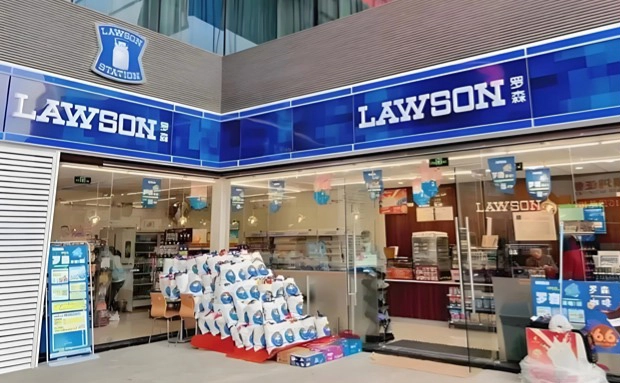
LAWSON China, Japan’s largest overseas subsidiary of LAWSON, operates more than 6,300 convenience stores nationwide. As the business expanded rapidly, LAWSON faced challenges including fragmented data, manual budgeting processes, limited store-level visibility, and difficulties in responding quickly to market changes.
With EVOX, LAWSON established a centralized retail planning framework that connected financial and operational data across stores. The platform enabled multidimensional profitability analysis, AI-powered forecasting, and more agile scenario planning, helping teams better understand store performance and optimize resource allocation.
Business Impact:
- 95% process automation, reducing manual errors and improving operational efficiency
- 60% shorter budget cycles, accelerating planning and execution
- 360° visibility into financial performance across stores and regions
- 3x faster resource allocation to respond to market changes
LAWSON’s transformation demonstrates how retailers can move beyond sales-based management and build a smarter store-level profitability framework to support sustainable growth.
Turning Store Data into Profitable Growth
Store-level profitability analysis is no longer just a reporting exercise. It is becoming a strategic capability for modern retailers.
The most successful retailers are moving beyond questions like:
“Which stores sell the most?”
and focusing on:
“Which stores create the most value, why do they succeed, and how can we replicate that success?”
With EVOX, retailers can transform store-level data into actionable insights, enabling smarter investments, optimized operations, and sustainable profitable growth.
EVOX empowers retailers to build a smarter, more agile profitability management framework — helping every store become a driver of sustainable growth.
Tony Lai is the General Manager of EVOX Platform, where he works with finance leaders across industries to improve strategic planning, forecasting, and enterprise performance management. He frequently collaborates with CFOs and FP&A teams in life sciences organizations to strengthen financial visibility across complex R&D portfolios.
See it in your environment
Take the next step with EVOX
Explore how connected planning, consolidation, and performance management can support your priorities.
Start a conversation