
For retail chains, forecasting revenue accurately is becoming harder as store networks expand, customer behavior changes, product demand shifts, and promotions become more frequent. Yet many organizations still depend heavily on historical sales trends, disconnected spreadsheets, and top-down assumptions.The challenge is not…
For retail chains, forecasting revenue accurately is becoming harder as store networks expand, customer behavior changes, product demand shifts, and promotions become more frequent. Yet many organizations still depend heavily on historical sales trends, disconnected spreadsheets, and top-down assumptions.
The challenge is not simply predicting a single revenue number. Retail leaders need to understand which stores, products, channels, and commercial actions will drive that number – and whether the resulting growth will create sustainable profit.
EVOX helps retailers connect financial plans with operational drivers, enabling more granular store-level forecasting, faster scenario analysis, and a clearer view of the drivers behind revenue and margin.
Why Traditional Retail Revenue Forecasting Falls Short
1. Aggregated forecasts hide store and product performance
A chain-level forecast can show whether total revenue is growing, but it may not explain where growth is coming from. Without sufficient granularity, management can struggle to identify:
- Which stores and regions are outperforming or underperforming
- Which product categories and SKUs are contributing to growth
- Which channels are gaining or losing momentum
- How changes in product mix affect gross margin and profitability
Store-level and SKU-level visibility turns the forecast from a reporting exercise into a management tool.
2. Spreadsheet-heavy processes slow the forecasting cycle
Retail forecasting often requires inputs from finance, commercial teams, operations, regions, and stores. When those inputs are collected through multiple spreadsheets, teams can spend significant time consolidating files, reconciling versions, and aligning assumptions.
- Multiple versions of Excel files
- Manual data consolidation and reconciliation
- Inconsistent assumptions across functions or regions
- Time-consuming adjustments when business conditions change
As a result, finance teams may spend more time preparing the forecast than analyzing what it means.
3. Revenue growth and profitable growth are not the same
A promotion, channel, store, or product can increase sales while contributing little incremental profit. Discount depth, product margin, channel cost, marketing investment, rent, labor, and other operating costs can materially change the economics behind revenue growth.
Retail forecasting therefore needs to connect the revenue outlook with profitability analysis rather than treating sales growth as the only measure of success.

A Better Forecast Starts with Retail Business Drivers
Instead of asking only, “How much revenue will we generate next year?”, retail leaders can build forecasts around the operational drivers that create revenue.
Store-level revenue drivers
A practical driver-based model can connect factors such as store count, customer traffic, conversion, average transaction value, product mix, promotions, and seasonality to the revenue forecast. The exact drivers will differ by retail format and available data.
For example, management can model how a change in traffic or average transaction value affects a store, region, or chain-level forecast, rather than simply applying a percentage growth assumption to last year’s sales.
SKU and channel profitability
Revenue drivers explain how sales may change. Profitability analysis adds a second question: where is value actually being created? By analyzing revenue, cost, margin, promotion effectiveness, and channel contribution at a more detailed level, retailers can evaluate whether forecast growth improves overall economics.
Scenario-based planning
Forecasts should also make it easy to test alternative assumptions before management commits resources. Typical retail scenarios include:
- Opening, closing, or relocating stores
- Changing promotion frequency or discount levels
- Adjusting prices or product mix
- Shifting investment between channels
- Responding to regional demand changes
- Testing changes in store traffic, labor, rent, or other operating assumptions
How EVOX Enables More Accurate Retail Revenue Planning
1. Create a unified planning framework
EVOX brings financial, sales, and operational planning data into a centralized planning environment. Retail teams can plan and analyze performance across multiple dimensions, including stores, regions, channels, product categories, and individual SKUs.
A common planning framework helps finance and business teams work from aligned assumptions and reduces the fragmentation created by disconnected planning files.
2. Build driver-based forecasts at the level the business manages
Rather than relying only on historical growth rates, EVOX supports driver-based planning models that can connect operational assumptions to financial outcomes.
- Store count and store productivity
- Customer traffic and sales performance
- Product and SKU demand patterns
- Channel contribution
- Promotional impact
- Pricing and margin assumptions
This makes the forecast easier to explain: management can see not only the expected result, but also the assumptions and business drivers behind it.
3. Connect revenue forecasting with SKU and channel profitability
EVOX supports granular analysis of revenue, cost, and margin across products and channels. Retail leaders can use these insights to evaluate product portfolios, promotion allocation, channel strategy, and resource investment.
The objective is to move from “Where will revenue grow?” to the more valuable question: “Where can we generate profitable, sustainable growth?”
4. Run rolling forecasts and scenarios faster
Retail conditions can change faster than an annual budget cycle. EVOX enables organizations to update assumptions and evaluate alternative scenarios more frequently, helping finance and operations respond to changes in sales performance, store expansion, promotions, costs, and demand.
5. Use AI-augmented analysis to accelerate insight
EVOX AI capabilities can support conversational data exploration, root-cause attribution, anomaly detection, and AI-driven forecasting. These capabilities are designed to help users move faster from forecast results to the drivers and exceptions that require management attention.
Customer Success: Mixue Ice Cream & Tea
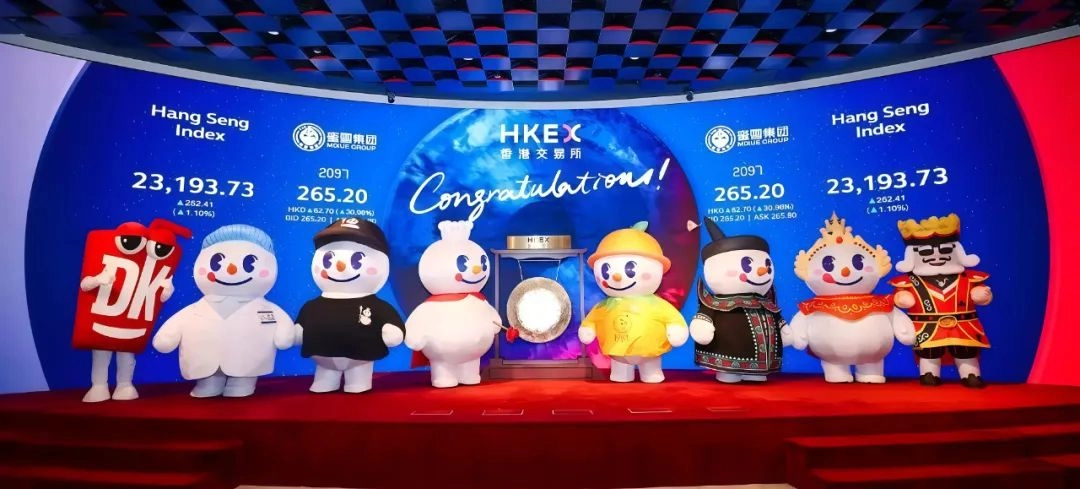
Mixue Ice Cream & Tea is a fast-growing food and beverage retailer with an integrated value chain spanning product development, manufacturing, logistics, sales, and a large retail network.
As the organization expanded, its planning environment became more complex. According to EVOX’s published customer materials, Mixue needed to strengthen group-wide budgeting and planning while improving the level of detail available for operational decision-making.
Planning challenges
- Decentralized budgeting practices across business units
- Limited granularity in sales planning across products, regions, and operational drivers
- Increasing complexity in group-wide planning and consolidation as the business scaled
EVOX approach
Mixue implemented EVOX to establish a more centralized, driver-based planning framework. The solution supports more detailed planning by region, channel, and product, while bringing group and business-unit planning into a more consistent management process.
EVOX current public customer-story materials also describe Mixue’s use of the platform for enterprise-wide budgeting and planning and strategic alignment during rapid expansion. Because publicly available EVOX sources do not provide enough independently verifiable detail for every quantitative outcome, this article intentionally avoids adding unsupported performance percentages.
Business impact
- A more unified budgeting framework across group and business units
- More detailed sales planning by region, channel, and product
- Stronger scenario analysis for management decision-making
- A more connected planning process supporting enterprise-wide strategic alignment
The Mixue example illustrates an important principle for fast-growing retail organizations: improving forecast quality is not only about adopting a new forecasting algorithm. It also requires consistent planning processes, greater operational granularity, and stronger connections between business assumptions and financial outcomes.
Why Retail Leaders Choose EVOX
Granular planning at retail scale
Retail organizations can plan across stores, regions, products, SKUs, and channels while connecting detailed operational assumptions with financial outcomes.
Faster, more collaborative planning
Centralized workflows and integrated planning reduce dependence on manual consolidation and help finance and business teams collaborate around common assumptions.
Better visibility into profitable growth
By connecting revenue forecasts with costs and margins, retailers can evaluate not only how much they expect to sell, but also where growth is creating value.
Agile scenario analysis
Management teams can compare alternative business assumptions before making decisions about stores, promotions, pricing, products, channels, and resource allocation.
AI-augmented EPM
EVOX combines enterprise budgeting and planning with AI-assisted forecasting, analysis, and insight generation to help finance teams identify drivers and make decisions faster.
Move from Reactive Forecasting to Predictive Retail Planning
Retail success increasingly depends on how quickly an organization can understand change and translate it into action.
A modern retail revenue forecast should do more than extrapolate historical sales. It should connect store-level performance, product and channel economics, operational drivers, and alternative scenarios within one planning framework.
With EVOX, retail organizations can move toward a more connected planning model – one that helps finance and operations explain revenue drivers, evaluate profitable growth opportunities, update forecasts more efficiently, and make decisions with greater confidence.
Tony Lai is the General Manager of EVOX Platform, where he works with finance leaders across industries to improve strategic planning, forecasting, and enterprise performance management. He frequently collaborates with CFOs and FP&A teams in life sciences organizations to strengthen financial visibility across complex R&D portfolios.
See it in your environment
Take the next step with EVOX
Explore how connected planning, consolidation, and performance management can support your priorities.
Start a conversation